Planning Marine Deck Hardware Around the Installation
Marine deck hardware includes products with very different interfaces. A slotted intake cover, an open through-hull outlet, a five-spoke steering wheel and an angled stanchion base should not be selected by finish or a broad marketplace title alone. Start with the role of the component in the boat arrangement, then identify the exact configuration and drawing.
The four product groups on this page provide a practical way to organise an enquiry. Each detail page shows a selected configuration and explains the information to confirm. Use the boat design, the chosen product instructions and the project requirements when reviewing the final arrangement. This guide supports communication between buyer and supplier; it does not establish a universal installation method or performance rating.
Separate the Four Product Functions
Record what each fitting is intended to do before comparing dimensions. An intake strainer has a slotted external cover. An open outlet fitting has an unobstructed flange opening. The selected steering wheel has a central hub, five spokes, a black rim and a rotating grip knob. A stanchion base has a socket and mounting plate for a specified tube arrangement.
These visible differences are useful for identification, but they do not describe every version in a product family. Compare the exact selected drawing, connection and supplied-parts list. Do not carry a material, pressure, capacity or application statement from one family into another simply because the components have a similar polished appearance.
Marine Intake Strainers: Review Cover and Stem Together
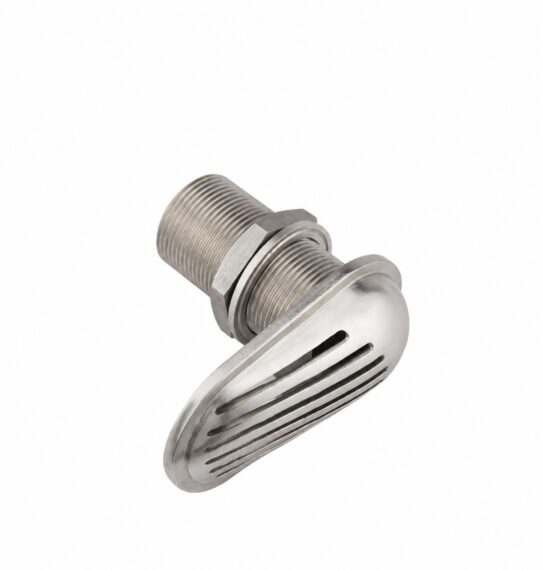
The selected marine intake strainer has an oval slotted cover, a threaded stem and a retaining nut. The cover footprint and the stem arrangement need to be identified together. Provide the cover length and width, the available mounting thickness, the required internal connection and any relevant orientation constraints.
For replacement work, include a view of both sides of the existing arrangement where accessible. A photograph of the external cover alone may not show the connection that must be matched. Confirm dimensions and required documents for the exact version. The slots and visible finish should not be used to infer a flow rating or material grade.
Thru Hull Outlet Fittings: Confirm an Open Connection
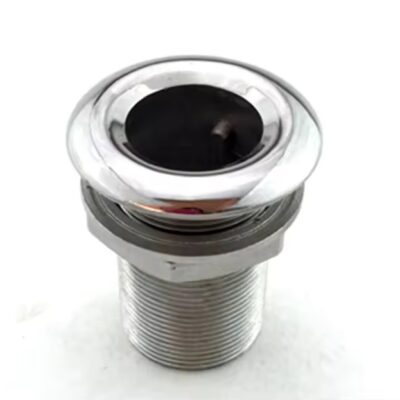
The marine thru hull outlet fitting shown here has an open round flange and a long threaded stem. It differs from a deck filler with a removable cap and from an intake fitting with a slotted cover. Identify the bore, flange footprint, stem dimensions and usable mounting length in the enquiry.
Describe the connected pipe or hose arrangement separately, including the interfaces that the selected fitting must match. Agree the sealing and fixing requirements with the installation specification. For an existing boat, show the surrounding space and retained components so that the proposal can be checked against the actual arrangement rather than an approximate external match.
Boat Steering Wheels: Match the Hub to the Helm
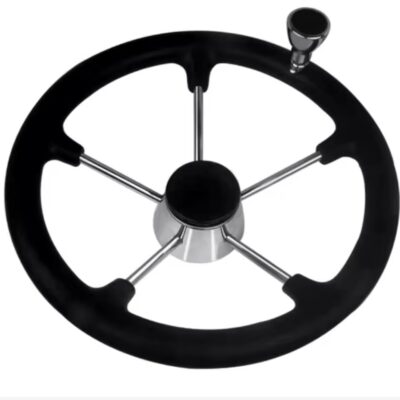
The marine boat steering wheel reference has five spokes, a black rim and a rotating grip knob. Confirm the wheel diameter, hub interface, rear clearance and knob position against the selected helm. The centre of a similar-looking wheel may have a different connection, so include the helm and shaft information in the enquiry.
Identify the hub, cap, fasteners and any other components expected in the supply. Ask for confirmation of the complete assembly and the relevant product instructions. Do not infer a torque rating or universal steering-system compatibility from the photograph. Review the specified interface and installation requirements before selecting the version.
Stanchion Bases: Check Tube, Socket and Plate Geometry
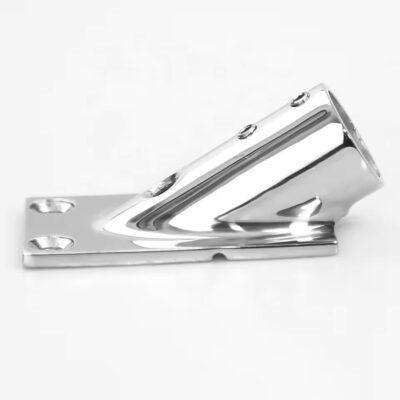
The marine stanchion base reference has an angled tube socket on a rectangular plate. Record the tube diameter, socket angle, plate footprint, fixing-hole spacing and access to the securing screws. Review the base with the connected tube and the supporting structure rather than as an isolated polished component.
If the project requires a particular structural performance, identify the requirement and the supporting evidence needed for the complete assembly. The photograph is not a load certificate. Confirm the selected configuration, fixings and installation detail against the project drawings before assuming that another visually similar base can be substituted.
Create a Consistent Enquiry Drawing
Use one unit system throughout the enquiry and label the orientation of the component. Show the principal dimensions and the surfaces or interfaces between which they are measured. Add the drawing revision and a clear product reference. Photographs can supplement the drawing, but should not replace measurements that are important to fit.
Mark estimated or inaccessible dimensions as items for confirmation. This is preferable to presenting an approximate value as an approved requirement. Keep the mating component visible in the drawing where possible. A socket, thread, hose tail or mounting plate can only be assessed properly when the corresponding connection and available space are also understood.
Distinguish Supplied Parts from Existing Equipment
List the components expected with the fitting. Identify whether nuts, caps, keys, screws, connectors or other items are included in the enquiry or will be provided separately. An accessory appearing in a photograph should not automatically be treated as part of the commercial supply.
For replacement work, make a separate list of items that will remain on the boat. Explain which interfaces must match those retained parts. If the proposed version changes a connection or fixing arrangement, request a revised assembly review. Keep any proposed substitution visible in the quotation so that the final order describes what will actually be delivered.
Agree Material and Surface Appearance Separately
Specify the required material and the documents needed to support it. A reflective surface does not establish a metal grade, and a generic product name does not identify the manufacturing method. Ask the proposal to state the selected material and any limitations in the available documentation.
Describe the required surface appearance through an agreed reference or sample. Identify the visible faces to which the finish applies, and distinguish cosmetic requirements from dimensional checks. A polished flange may look acceptable while a connection dimension is incorrect. Review each requirement separately against the same product reference rather than relying on a general statement that the fitting is suitable.
Identify Installation Constraints Early
Include the available space behind and around the fitting. Note any restriction on nut access, hose routing, socket orientation, cover position or operation of a cap or key. A component that matches one visible dimension may still conflict with another retained part.
Use the installation drawing to communicate these constraints before a version is selected. Follow the boat design and the chosen product instructions for the final arrangement. Do not alter a part or substitute a connection merely to resolve an unconfirmed fit. If the proposed assembly differs from the existing one, record the difference and obtain the necessary review before ordering.
Ask for Model-Specific Documentation
State the evidence required for the project in the enquiry. This may include agreed material records, drawings, inspection information or other documents relevant to the selected fitting. Identify the product reference and required scope so that a general company document is not confused with evidence for a specific supplied assembly.
Review the names and drawing revisions on the documents against the quotation. Where a document is unavailable or its scope is unclear, resolve the question before treating it as a selection basis. Do not copy a certification, test value or warranty from a marketplace title into the project specification without checking that it applies to the exact product.
Compare Offers Using the Same Specification
A meaningful quotation comparison uses the same configuration, quantity, material, finish and supplied-parts list. Ask each proposal to identify its drawing or model reference and to list any deviation from the enquiry. Keep optional accessories and alternative versions separate.
Also agree the inspection scope, packaging and delivery basis. A different total may reflect excluded components or a different version rather than a simple price difference. Clarify these points before selecting the offer. The final order should align with the reviewed drawing and documentation rather than referring only to a broad category such as marine hardware.
Prepare Receiving and Inspection Records
Agree the checks that will be made when the components arrive. Keep the purchase specification, drawing revision, parts list and appearance reference available together. Record which dimensions, markings and supplied items are important to the installation.
On receipt, compare the delivered components with the agreed records and retain the supporting documents. If a flange, thread, socket or cap arrangement differs from the approved version, seek clarification before installation. Packaging should keep related parts identifiable during handling. Preserve the exact product reference in the receiving record so that later questions can be traced to the appropriate supply.
Send a Complete Marine Hardware Enquiry
Choose the relevant product family, then send Hengke Casting the required version, quantity, installation context and dimensioned drawing. Include photographs of an existing assembly where useful, and identify the mating connections, mounting constraints, material, finish and documents required.
Keep one reference across the enquiry, quotation, drawing and purchase order. When a dimension changes, issue a revised record and make the superseded version clear. This simple document discipline helps buyers and suppliers distinguish a confirmed configuration from an approximate visual match and keeps unresolved questions visible before production or dispatch.